Thursday, April 8, 2010

roswell

My Boy Mai!

What is the story behind Rosewell, the UFO that crashed into New Mexico years ago? Did the government really try to hide this from the world?

Your Boy Riel!
***************************

Okay! So the Roswell UFO incident was the alleged recovery of extra-terrestrial debris, including alien corpses, from an object which crashed near Roswell, New Mexico, USA, in June or July 1947. A rancher who was out checking his cattle came across a large field covered in the debris which measured 3/4 of a mile long. The wreckage was reported as tiny pieces of shiny, metallic material. It was like nothing the rancher had ever seen so he contacted the Roswell Army Air Field and talked to major Jesse A. Marcel. News spread across Roswell with "flying saucer" reports on the front page of the news. On July 8, 1947, Roswell Army Air Field public information office in Roswell, New Mexico, issued a press release stating that personnel had recovered a crashed "flying disc" from a ranch near Roswell, sparking intense media interest. The following day, the press reported that Commanding General of the Eighth Air Force stated that, in fact, a radar-tracking balloon had been recovered by the RAAF personnel, not a "flying disc. A subsequent press conference was called, featuring debris from the crashed object that confirmed the weather balloon debris. All a little suspicious and secretive for a little balloon crash I'd say!

The case was quickly forgotten and almost completely ignored, even by UFO researchers, for more than 30 years. Then, in 1978, physicist and ufologist Stanton Freidman interviewed Major Jesse A. Marcel who was involved with the original recovery. Marcel expressed his belief that the military had covered up the recovery of an alien spacecraft. He stated that he felt pressured by the military to tell the media it was a weather balloon crash.

Additional witnesses and reports emerged over the following years. They added significant new details, including claims of a huge military operation dedicated to recovering alien craft and aliens themselves, at as many as 11 crash sites, and alleged witness intimidation. A women reported to have worked on recovering the debris and says that alien bodies were found, both dead and alive. In 1989, former mortician Glenn Dennis claimed in a personal detailed account that alien autopsies were carried out at the Roswell base.


Since the late 1970s the incident has been the subject of intense controversy and the subject of conspiracy theories as to the true nature of the object which crashed. The US military maintains that what was actually recovered was debris from an experimental high-altitude surveillance balloon belonging to a classified program names "Mogul"; however, many UFO proponents maintain that in fact a crashed alien craft and bodies were recovered, and that the military then engaged in a cover-up.

It's a crazy world out there!

Wednesday, April 7, 2010

working visas

My dear Riel,

I have travel on my mind and want to know about the working Visas of the world! Please tell me about traveler Visas for Australia, Britain, Spain, France, the Netherlands, and Sweden.
How much does it cost?
How long is the Visa for?
What do you need to do to apply?
Is it hard for Canadians to get accepted?

(you can copy and paste the questions for each country to fill out.. plus any other important information you find out)

POW

***********************

Working Visas

Looking through all the different embassy websites its really interesting to see all the countries that have either youth exchange programs or holiday working Visas for Canadians. Australians are allowed in almost every country! Where as Americans are allowed in very few..
Its mostly Canadian, Australian and New Zealand Citizens. We are very lucky to be Canadian, life seems a whole lot easier :)

Australia

. Valid up to 12 months
. In between the age 18-30
. $230 for application fee
. Easy for Canadians since Australia and Canada are both common wealth countries


UK

.Valid up to 24 months.
. In between the age of 18-30
. Also a common wealth country

Spain

. Have to be sponsored by a job to obtain a working visa.
. Because Canada is not part of the EU its difficult to work in Spain

France

. Has a youth exchange program with Canada
. They allow 14000 Canadians per year
. 18- 35 years of age

Netherlands

-Up to a year working Visa
- 18- 30 years of age

Sweden

- Youth exchange program
- 18-30 years of age
- Take up to 100 Canadians per year ( seems low, but they have said it has never filled up ?? )

Very good Website, saying which Countries allow which citizens to have a working visa.

http://www.liveworkplay.com.au/visa.html

http://en.wikipedia.org/wiki/Working_holiday_visa

Most of the visa requirements are between the ages of 18-30 and usually for the duration of 1 year. You must have around $4000 CAN in your account before going abroad. The Visa Application usually costs around $250. Keep in mind that if for some reason you do not get accepted, there will be no refund on your application fee. Most application process time can take anywhere from 3- 12 weeks, 3 being very lucky :)

Interesting fact-

Uk Ancestry Visa

Validity: 5 years (renewable) for Ancestry Visa

Eligibility: you are eligible to apply for a UK Ancestry Visa if:

  • you are a Commonwealth citizen
  • you are aged 17 or over
  • you have a grandparent who was born in the UK, the Channel Islands or the Isle of Mann
  • you have a grandparent that was born in what is now the Republic of Ireland prior to 31 March 1922 (see note below)
  • you can show proof that you intend to work in the UK
  • you can support yourself and any dependants, without recourse to public funds

*Note: You will need to show your full, original birth certificate as well as the full, original birth certificate of the parent you are claiming through and the grandparent you are claiming through.

**Note: Note: If you or your parent (who you are claiming ancestry through) are adopted, you can still apply for entry clearance under this category. You must show evidence of the legal adoption with your application form.


.

Monday, April 5, 2010

japa mala

what is japa mala and why does it have 108 beads?

***************

A japa mala or "mala" (means garland in Sanskrit) is a set of beads commonly used by Hindus and Buddhists, usually made from 108 beads. Malas are used to keeping count while reciting, chanting, or mentally repeating a mantra or the name or names of a deity. This practice is known in Sanskrit as japa. Malas are typically made with 19, 21, 27, 54 or 108 beads. These mantras can be recited for different purposes linked to the mind.

What malas are made of...
Material can vary according to the purpose of the mantras used. Some beads can be used for all purposes and all kinds of mantras. These beads are made of Bodhi Root, Bodhi seed or wood.

Appeasing mantras should be recited using white-colored Malas. Materials such as crystal or pearl are preferable. They can serve to purify mind and clear away obstacles like illness. This mala has 100 beads.

Increasing mantras should be recited using Malas of gold, silver or lotus seeds and with 108 beads. The mantras counted on these can serve to increase life span, knowledge or merit.

Mantras for overcoming should be recited using malas made of saffron, sandal wood or other forms of wood including elm, peach and rose wood.

Mantras to tame by forceful means should be recited using malas made of Rudraksha beads or bone. There are 25 beads on this mala, used to tame others. To tame by forceful means, means to subdue harmful energies, such as extremely malicious spirits, or general afflictions.

Using Malas...
A mantra is a word or series of words that are chanted aloud of silently to invoke spiritual qualities. Chanting is used as a spiritual tool in virtually every cultural and religious tradition. In the yogic tradition a mantra is a Sanskrit word that has special powers to transform consciousness, promote healing or fullfill desires. Mantras are typically repeated hundreds or even thousands of times. The practice of chanting a mantra is used as a form of meditation. Sitting in a comfortable position, with the eyes closed, the mantra is repeated over and over. The mind is focused on the mantra, the thoughts are let go of and the breath is slow and deep. The mala is used so that one can focus on the meaning or sound of the mantra rather than counting its repetitions.

One repetition is usually said for each bead while turning the thumb clockwise around each bead, though some traditions is said to do it counterclockwise. When arriving at the head, one turns the mala around and then goes back in the opposing direction. You are not meant to count the head bead, it is for the starting and ending point of counting your malas. For a mala bracelet that has 27 beads you would go back and forth along the bracelet 4 times to reach 108 mantras. You are not supposed to touch your pointer finger on the mala, but use your thumb and middle finger to roll the beads.

To empower the mala and the mantra used, JAPA (mantra meditation) should be practiced each day for 40 continuous days. When the mala becomes empowered it can be worn or lightly placed on oneself or others to transmit the energy of the mantra as well as the energetic qualities of the mala. When you use a new mantra on a mala it will replace any engery that the mala had before, so it is recommended that you use a new mala for each mantra you perform.

Why 108 beads..
There are numerous explanations why there are 108 beads. It bears special religious significance in a number of Hindu and Buddhist traditions.

In traditional Buddhist thought, people are said to have 108 afflictions or klesas. There are six senses (sight, sound, smell, taste, touch and consciousness) multiplied by three reactions (positive, negative or indifference) making 18 "feelings." Each of these feelings can be either "attached to pleasure or detached from pleasure" making 36 "passions", each of which may be manifested in the past, present or future. All the combinations of all these things makes a total or 108, which is represented by the beads.

Practitioners of Vajrayana Buddism, use the number 108 for a different purpose. After reciting 100 mantras, 8 more mandras are done to make up for any errors that were made.

Ananda Coomaraswamy (a Sri Lankin philosopher) holds that the numerology of the decical numberic system was key to the inception of 108. He says 1 is for bindu, 0 for Shunyata and 8 for ananta.

Photo taken by Riel in little India in Vancouver. Japa Malas and the bags they go into.

Tuesday, March 30, 2010

the healthy foods

Dearest Riel,

When you told me about how cinnamon was good for you, (your heart I believe?), it made me start using it a lot more. I like knowing the health benefits of the food I'm eating because then I'm more inclined to make an effort to eat them. But sadly, I don't know many other ones. We've all heard an apple a day keeps the doctor away. Popeye ate spinach for strength etc. etc. I've also been told that fresh ground pepper speeds up your metabolism.. as does green tea if you drink it within a few hours of eating a meal. So I'd like you to tell me about some more. Include cinnamon again because I forget. But also tell me other foods or spices that are good for you and why.
mucho gracias!
Mai

***************

The Healthiest Foods..

Apricots- Have Beta- carotene in them, which helps prevent free- radical damage and protect the eyes. The body also turns beta- carotene into vitamin A, which may help ward off some cancers, especially of the skin. When an Apricot starts turning soft it loses its nutrients.


Avocados- Have Oleic acid in them, a unsaturated fat that helps lower cholesterol and raise levels of HDL. Avocados are also a good dose of fiber.


Raspberries- Have Ellagic acid, which helps stall cancer- cell growth. These berries are also packed with vitamin C and our high in fiber, which helps prevent high cholesterol and heart disease.


Cantaloupe- Is packed with Vitamin C and beta-carotene, both powerful antioxidants that help protect cells from free- radical damage. Half a melon has almost twice as much potassium then a banana, which helps lower blood pressure.


Cranberry Juice- Helps fight bladder infections by preventing harmful bacteria from growing.


Tomatoes- Has Lycopene one of the strongest carotenoids, acts as an antioxidant. Research shows that tomatoes may cut the risk of a bladder, stomach and colon cancers in half if eaten daily. If you eat fresh and drizzle with olive oil, because lycopene is best absorbed when eaten with a little fat.


Raisins- Are a great source of Iron, which helps with the blood transport oxygen and which many women are short on. Eat especially during your period.


Figs- A good source of potassium and fiber, figs also contain vitamin B6 which is responsible for producing mood- boosting serotonin, lowering cholesterol and preventing water retention. The pill depletes B6, so if you use this method of birth control, make sure to get extra B6 in your diet.


Papaya- Papayas may be very helpful for the prevention of atherosclerosis and diabetic heart disease. They are an excellent source of vitamin C, Vitamin E and Vitamin A, three powerful antioxidants. They are suppose to prevent colon cancer, lower inflammation and to improve healing from burns. This fruit is a choice for preventing such illness as recurrent ear infections, colds and flu. If you or someone you know is a smoker, then eating vitamin A rich foods, such as papaya is a healthy choice and may save your life.

Bananas- Are rich in Vitamin B6 and they are a good source of fiber, vitamin C, magnesium and potassium. Lack of B6 in your diet can cause weakness, irritability, and insomnia. The potassium found in bananas helps to regulate blood pressure and may reduce the risk of high blood pressure and stroke.


Coconut- Is known to boost energy and endurance, enhancing physical and athletic performance. They increase the metabolic rate of the body, which means that energy is consumed faster and excess body weight is burned off. It also contains a PH that is good for your skin, supporting the natural chemical balance of the skin. It softens skin and helps relieve dryness and flaking. It can prevent wrinkles, sagging skin and age spots.

Rhubarb- Is regarded as a fruit, but botanically it is a vegetable. It is known to relive hot flashes in prementopausal women. It is also rich in potassium, vitamin C and dietary fiber.


Goji berries- Hailed as the new superfood, goji a himalayan berry has inspired a surge of interest for its use in treating diabetes, hypertension, malaria, fever, cancer and other ailments. Goji berries pack more vitamin C then some oranges and more beta-carotene then carrots.


Lemons and Limes- Limonene, furocoumarins and vitamin C, all of which help prevent cancer. Squeeze over salads, fish, beans and vegetables for fat free flavor.


Onions- Have Quercetin in them, which is one of the most powerful flavonoids( natural plant antioxidants). Studies show it helps protect against cancer.


Artichokes- These odd vegetable contains silymarin, and antioxidant that helps prevent skin cancer, plus fiber to help control cholesterol.


Ginger- Contains gingerols may help reduce queasiness, other compounds may help ward off migraines and arthritis pain blocking inflammation-causing prostaglandins. It is also knows as one of the best foods you can eat, especially when you have a cold.


Broccoli- Contains indole-3-carbinol and sulforaphane, which helps protect against breast cancer. It also has a lot of vitamin C and beta- crotene. Don't over cook broccoli to preserve phytonutrients steam lightly.


Spinach- Contains Lutein and zeaxanthin, carotenoids that help fend off macular degeneration, a major cause of blindness in older people. Plus studies shoe this green fountain of youth may help reverse some signs of aging.


Bok Choy- Contains Brassinin, which some research suggest may help revert breast tumours, plus indoles and isothiocyanates, which lower levels of estrogen, make this vegetable a double barrelled weeping against breast cancer.


Squash( butternut, pumpkin, acorn) Winter squash has huge amounts of vitamin C and beta- carotene, which may help protect against endometrial cancer.


Arugula- Has Phenethyl isothiocyanate, which along with beta- crotene and vitamins C and E, may help keep cancer cells at bay.


Garlic- The sulphur compounds that give garlic its pungent flavour can also lower LDL("bad') Cholesterol, lower blood pressure and even reduce your risk of stomach and colon cancer. Bake a whole head for 15-20 minutes, until soft and spread of bread instead of butter.


Quinoa- Has way more protein then any other grain, plus iron, riboflavin and magnesium.


Lentils- Contains Isoflavones, which may inhibit oestrogen-promoted breast cancers, plus fibber for heart health and an impressive 9 grams of protein per half cup.


Bulgur- High in fibber and protein, and low in fat and calories. Bulgur is extremely beneficial to the digestive system and can help avoid constipation, heart disease and cancer. A cup of bulgur has fewer calories, less fat, and more then twice the fibber of brown rice.


Peanuts- Studies show that peanuts or other nuts( which contain mostly unsaturated " good" fats) can lower your heart- disease risk by over 20 percent. Keep a pack in your purse, gym bag or backpack for a protein- packed post workout nosh or an afternoon pick me up, that will satisfy you until supper.


Pumkin seeds- Has been treasured by American aboriginal people for its dietary and medicinal properties. Of all the nuts and seeds typically consumed as snacks, pumpkin seeds are among the leaders of phytosterols, a naturally occurring compound with an established reputation for cholesterol- lowering properties. These seeds provide a healthy dose of omega-3 and omega-6 fatty acids and is a good source of minerals, including phosphorus, magnesium, zinc, making it one of the most nutritious and flavourful seeds around.


Flax seeds- It has been discovered that the omega- 3 gat and high fibber in flax may play a role in the fight against diabetes. A study shows that participants who ate flaxseed bread had blood sugar levels 28% lower an hour after eating then their counterparts who ate bread made with wheat flour. Flax is also a cancer fighting agent.


Yogurt- Bacteria in active- culture yogurt helps prevent yeast infections, calcium strengthens bones. If you are lactose intolerant, never fear, yogurt should not bother your tummy.


Shelfish (Clams, Mussels)- Filled with Vitamin B12 to support nerve and brain function, plus iron and hard-to-get minerals like magnesium and potassium.


Salmon- Cold water fish like Salmon, Mackerel and tuna are the best sources of omega-2 fatty acids, which help reduce the risk of cardiac disease.


Crab- A great source of vitamin B12 and immunity- boosting zinc. A 3- ounce portion has


Tumeric- May ease aches and inflammation. In Ayurveda ( the tarditional medicine of India), this herb has been used for thousands of years to treat arthritis and other ailments. Some suggest that turmeric may help relieve some symptoms of rheumatoid arthritis.


Cinnamon- Studies show that half a teaspoon of cinnamon a day lowers the cholesterol. It has an ant-clotting effect on blood. Half a teaspoon of cinnamon and 1 tablespoon of honey is good for helping with arthritis. In traditional medicine, cinnamon has been used for digestive ailments such as indigestion, gas, bloating, upset stomach and diarrhea. It also has a mild anti-inflammatory effect and helps slow the spoiling of food.

Green tea- Dating back more then 4000 years. Green tea is good for boosting energy, mental clarity, lifts your mood, eases digestion, improves skin texture, boosts immune function, reduces risk of cancer, lowers blood pressure, stabilizes blood sugar, reduces total cholesterol and LDL cholesterol, increases HDL cholesterol, and promotes weight loss.


Lemon honey ginger tea- A healthy tea to prevent colds and get rid of colds is a " Lemon, Ginger and Honey tea". Slice a 2 or 3 inch piece of ginnier into thin strips with no bark left on it. A big teaspoon of honey and a good squeeze of lemon.


Monday, March 29, 2010

taxi

What does TAXI stand for and where did the cars originate?

Taxi Cab Taxi Cab

peace!

******************

Riel,

Taxi stands for Transparent Asynchronous Transmitter/Receiver Interface. What's that you say? Well, I have no idea. And it doesn't explain it anywhere, and even if it did that doesn't sounds so thrilling to me. So let's look more at the history....

The first Taxi existed in Ancient Rome where they employed a mechanism that used the turning of the cart's axle to release small balls. At the end of the trip, the passenger paid based on the number of balls that were released.

Horse-drawn carriages for hire began operating in London and Paris in the 1600's. The first service to ever be documented was in 1640 in Paris by a man named Nicolas Sauvage.

The first Canadian taxi service was in 1837 in Toronto by an ex-slave who escaped to Canada from Detroit.

The modern taximeter was invented in Germany by a man named Wilhelm Brun in 1891. These weren't put into taxi cabs though until a few years later in 1897, in Germany's first taxi company. Taximeters used to be kept outside the cars because they'd tick loudly while keeping track of your fare. The electronic meters that we know today were invented in the 1980's, allowing for the meters to be put inside the cars.

Gasoline-powered taxicabs began operating in Paris in 1899, in London in 1903, and in New York in 1907. The New York taxicabs were imported from France by Harry N. Allen. He was the first person to paint his taxicabs yellow after learning that yellow is the colour that is most easily seen from a distance.

New York Taxis

Hong Kong taxis

German taxis

Vancouver taxi

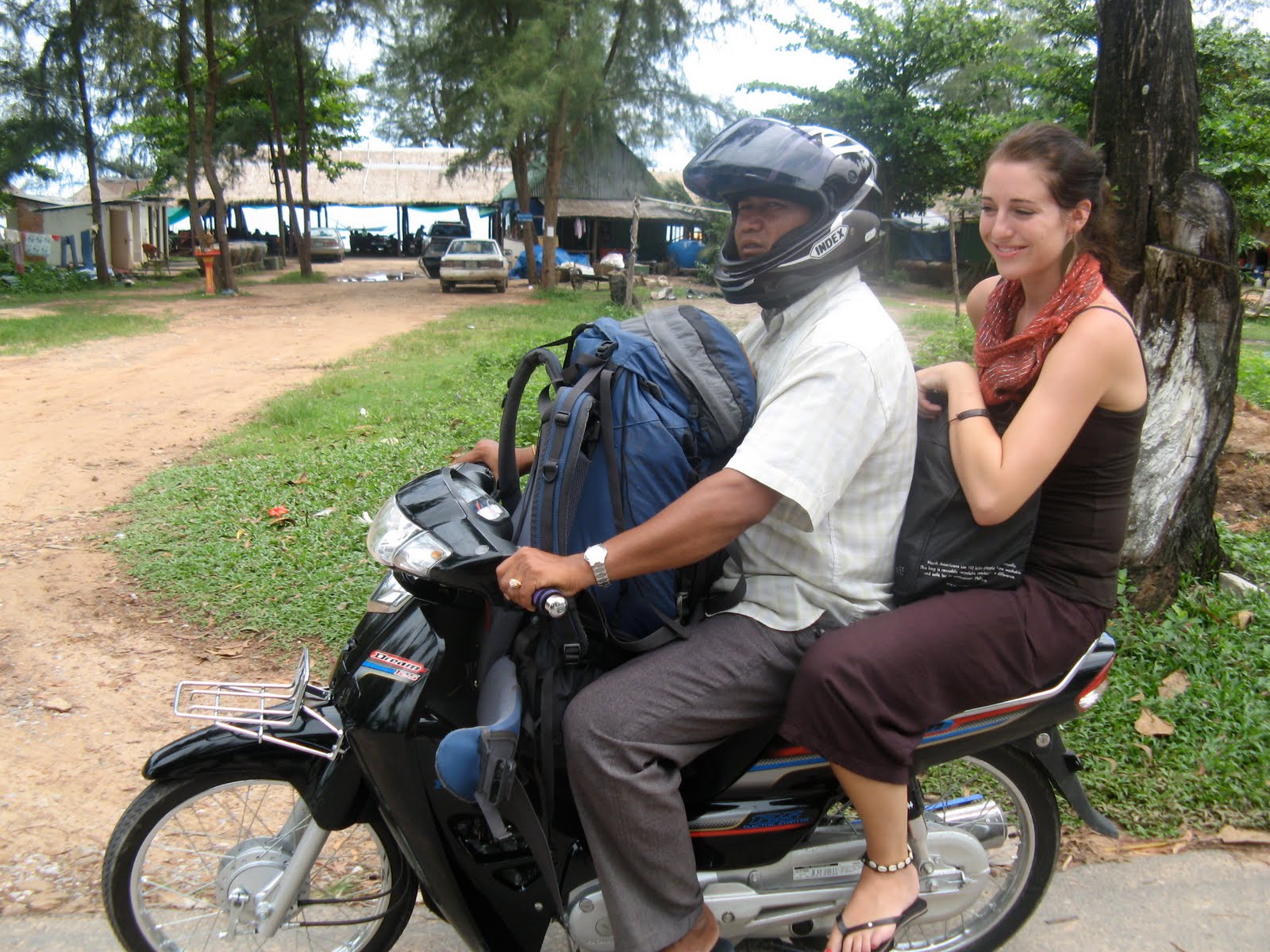
Camboda taxi (as scary as it looks.. at least HE had a helmet on!)

Thailand tuk tuk taxis

Thursday, March 25, 2010

oceans vs seas

Hej Mai!

What is the difference between a Sea and Ocean? When I lived in Stockholm I lived near the Baltic Sea, and it was only a bit Salty. And the smell was not like the smell in Vancouver. Some people say they are going to the sea, and some people say the ocean. Is there a difference? and If so what makes an ocean different from a sea. How many seas and oceans are there in the world?

TACK!

**************
Dear Riel,

The main difference between a sea and ocean is size. An ocean is a large body of salt water. Seas are smaller bodies of salt water that are usually situated close to oceans. They can sometimes be considered an ocean as well, such as the Caribbean sea which is also apart of the Atlantic ocean. Seas are partly or fully surrounded by land, like the Caspian or Aral seas.
Ocean beds are also much deeper and only support very basic life forms like bacteria and shrimp mainly because no sunlight reaches the bottom of the ocean . Since seas are close to land and are much shallower it is possible for plant and animal life to thrive.

In the ancient days you often heard about the seven seas. They were the bodies of water that were known about at the time. When they said "seven" they were actually referring to "many" seas. They were the Adriatic, Aegean, Arabian, Black, Caspian, Mediterranean and Red seas.

There are 4 oceans in the world; the Atlantic, Indian, Pacific and Arctic.

There are 108 seas in the world. Some of the main ones are The Bay of Bengal, The Arabian Sea, Red Sea, The Mediterranean Sea, The Baltic Sea, The Black Sea, The Adriatic Sea, The Caspian Sea and the Caribbean Sea.

Most of the salt in the ocean is derived from gradual processes such as the breaking up of the cooled igneous rocks of the Earth's crust by weathering and erosion, the wearing down of mountains, and the dissolving action of rains and streams which transported their mineral washings to the sea. All oceans and seas have different levels of salt and this is called it's "salinity" levels. Different salinity levels can be affected by melting of ice, inflow of river water, evaporation, rain, wind, wave motion and ocean currents.

The saltiest bodies of water in the world are the Dead Sea and the Persian Gulf because of their high evaporation levels. The Dead Sea is so salty that it is hard for marine life to live here hence being called the "Dead" sea.

*Levels of salinity in the worlds oceans and seas. Red is the highest levels.